


Florida Statutes Every Public Sector Leader Should Know for Risk Transfer

With legal and financial risks lurking in every contractual clause, understanding and implementing an effective risk transfer strategy isn’t a nice to have—it’s essential for safeguarding public resources and maintaining trust.
State statutes outline clear requirements for vendor compliance, insurance verification, and liability protections. Understanding these laws is the first step, but maintaining continuous compliance with them is another challenge entirely.
We’ll examine several key Florida statutes that impact third-party risk management and detail how automation can simplify compliance, reduce administrative burden, and protect agencies.
Key Florida Statutes That Impact Risk Transfer
Florida law sets clear expectations for how public entities manage third-party risk. From indemnification limits to insurance disclosure requirements, these statutes define what public sector leaders must enforce in their supplier agreements. Failure to comply can leave you vulnerable to costly claims, lawsuits, and operational disruptions.
Below are five key statutes that directly affect risk transfer in public contracts.
1. Florida Statute § 725.06 – Indemnification in Public Contracts
This statute restricts how much liability a public entity can shift to its vendors and contractors. While indemnification clauses allow agencies to transfer some risk, § 725.06 limits the extent of this transfer in construction and public works contracts. To be enforceable, indemnification provisions must include clear, unambiguous language and cannot require contractors to assume unlimited liability.
Key takeaways:
- Clear and Specific Language: Indemnification clauses must be unambiguous.
- Insurance Requirements: Vendors and contractors must carry designated policies—such as general and excess liability insurance—to support their indemnification obligations.
- Risk Mitigation: Proper enforcement of this statute protects agencies from excessive financial exposure.
2. Florida Statute § 440 – Workers’ Compensation for Public Contracts
Under § 440, public agencies must ensure that all vendors and contractors maintain valid workers’ compensation insurance. This law protects both workers and public entities by providing benefits to employees injured on the job without requiring the agency to assume liability.
Key takeaways:
- Employee Protection: Workers receive timely benefits for on-the-job injuries.
- Agency Safeguard: Public entities are shielded from medical expenses and lost wages claims.
- Due Diligence: Verify proof of workers’ compensation insurance from every vendor and contractor before work commences.
3. Florida Statute § 627.4137 – Vendor Insurance Disclosure Requirements
Transparency is critical in contractual risk transfer, and § 627.4137 mandates that contractors working with public bodies disclose their liability insurance details upon request. This includes information about policy limits, coverage terms, and the insurer’s identity.
Key takeaways:
- Enhanced Visibility: Full disclosure helps assess a vendor’s financial robustness.
- Informed Decision-Making: Ensure that vendors are neither underinsured nor non-compliant.
- Risk Assessment: Regularly review disclosed insurance details to confirm adequate coverage is maintained.
4. Florida Statute § 768.28 – Sovereign Immunity in Government Contracts
Sovereign immunity shields Florida’s state and municipal agencies from certain lawsuits and liability claims. However, § 768.28 outlines exceptions and limits to this protection, particularly in contracts involving third-party vendors.
Key takeaways:
- Balanced Protection: While sovereign immunity offers significant legal protection, it does not cover all liabilities.
- Contract Structuring: Agencies must craft vendor agreements to mitigate liabilities that fall outside the umbrella of sovereign immunity.
- Insurance Verification: Rigorously verify that vendors have sufficient coverage to manage any uncovered risks.
5. Florida Statute § 627.701 – Hurricane-Related Insurance for Vendors
Florida’s frequent hurricanes and severe storms make emergency preparedness essential for public bodies. § 627.701 requires that third-party contractors handling hurricane response, debris removal, and property repairs carry proper insurance coverage.
Key takeaways:
- Disaster Preparedness: Ensure vendors are equipped with policies covering property damage, liability, and business interruptions.
- Cost Containment: Avoid unexpected expenses post-disaster by confirming vendors are fully insured.
- Operational Resilience: Proper insurance compliance supports effective and efficient disaster response efforts.
How Evident Simplifies Compliance With Florida Statutes
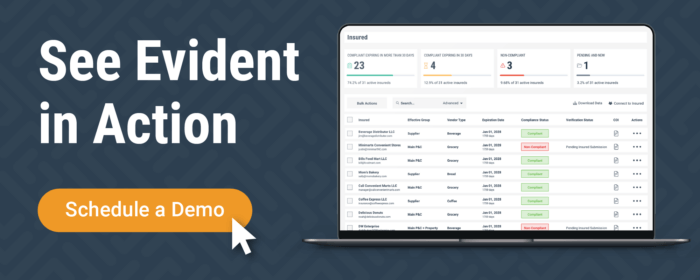
Maintaining compliance with Florida’s risk transfer laws is easy with an automated system. Evident’s automated risk management platform handles contractor COI verification, tracking, and reporting so agencies can reduce liability without administrative hassle.
- Automated Vendor Due Diligence: Simply add contractors and vendors, and our software verifies their insurance coverage against state requirements.
- Customizable Requirements: Set insurance standards based on vendor categories, such as transportation or emergency response.
- User-Friendly Compliance Tracking: Every department can monitor vendor COI compliance from a single, centralized platform.
- Robust Reporting for Audits and Budget Planning: Instantly generate detailed reports for public hearings, compliance checks, and financial planning.
Smarter Risk Management for Florida’s Public Bodies
Verifying vendor compliance with Florida’s legal requirements doesn’t have to be a manual burden. Automating risk transfer helps you confirm that vendors carry the right insurance, which reduces your liability while saving time.
Schedule a demo today to learn how Evident can eliminate the busy work, protect your city from unnecessary liabilities, and reclaim your day.
Related Resources
- What Insurance Should You Require from Vendors? A Practical Checklist
- Waiver of Subrogation: What It Means and Why It Matters
- Workers’ Compensation Monopolistic States: What They Are and How to Verify COIs
- Understanding Subcontractor Insurance – What You Need to Know
- What Risk Managers Should Know About Working with Police