


Complete Contractual Risk Transfer: Safeguarding Your Organization from Hidden Risks

Third-party suppliers and partners offer major benefits to your business, but choosing the wrong one can have lasting consequences.
According to Deloitte, failures of third-party partners cost companies between $500 million and one billion per incident—and that’s just the financial losses. A bad partnership can damage your reputation and undermine the public trust you’ve worked so hard to build. It can also disrupt operations if a high-risk third party doesn’t deliver on time or meet the agreed-upon standards.
Unfortunately, high-risk partners often go unnoticed until something bad happens. Without thorough due diligence, hidden issues like invalid certificates of insurance (COI) or insufficient coverage only become apparent when a crisis occurs. In that case, you might incur unexpected compensation claims and financial losses.
But who are high-risk partners? What dangers do they pose to your business?
Key Traits of High-Risk Partners
High-risk partners are third parties that can pose significant threats to your company. You can spot them if you know what to look for. Their characteristics include:
- Unverified business identity: Without proper credentials like a valid business license and registration, a third party’s legitimacy is questionable. Working with that partner is a risk because you’re not sure if the company is credible. It’s hard to trust they’ll deliver on their promises.
- Insufficient insurance coverage: If a contractor’s insurance coverage doesn’t meet the threshold in a contractual agreement, your company may pay out of pocket for damages, lawsuits, or injuries that happen because of the partnership. The same applies if the third party’s COI is missing or invalid.
- Poor compliance history: Repeated failures to meet contractual obligations is a big red flag. It’s a sign that the third party can’t deliver what you agree upon. Also, noncompliance with regulations means a contractor will likely bring you legal trouble or damage your reputation due to bad press.
- Financial instability: Looming bankruptcy. Outstanding liens. Poor credit ratings. They indicate financial issues in a third party’s company that could disrupt your business.
- High incident frequency: A history of claims, disputes, or accidents is a warning that a third party is unreliable.

The True Cost of High-Risk Partners
When you think about the consequences of working with the wrong third party, financial loss is often the first thing that comes to mind. However, the negative impact of bad partners goes far beyond that.
Financial Costs
When suppliers damage property or when their employees get injured while working for your company, their insurance company is supposed to cover the costs. If they are underinsured or uninsured, you’re left with the bill. You pay out of pocket for claims your contractor’s insurance should’ve covered. And if you take the contractor’s insurers to court, you’ll lose even more time and money to legal battles that can last for years.
Repeated workplace incidents can cause your insurance provider to raise your premiums as well, so be sure to thoroughly vet your third-party suppliers before bringing them on board.
Operational Costs
Third parties that fail to comply with quality standards slow down projects. If they don’t get things right the first time, they may have to redo tasks. This causes operational delays that might force you to reschedule deadlines.
Besides delays, high-risk partners also increase your administrative burden. For example, if a third party has a history of not meeting contractual obligations, extra effort and time might be necessary to thoroughly review the contractor’s work and solve non-compliance disputes.
Reputational Costs
Companies that skip safety standards, overlook industry regulations or get involved in shady practices can easily receive bad press. Being partnered with them could mean getting caught up in their public relations problems, and you might even lose trust among stakeholders, clients, and the public.
You need years to build a solid brand reputation, but it just takes one wrong partner to destroy it.
Real-World Lessons From Claims Losses
Exxon is one of the largest fuel, lubricant, and chemical companies in the world. The company hired a contractor at its refinery in Texas and required the contractor to have a minimum stated amount of liability insurance for its employees and to name Exxon as an additional insured in the policy. The third-party obtained coverage from several insurance providers and met the requirements.
When a workplace accident occurred, leaving some of the contractor’s employees injured and others dead, Exxon settled the incident for over $24 million. The contractor’s insurers only paid about five million of this amount. Exxon paid the remaining amount out of pocket because the contractor’s insurers denied Exxon coverage. They said Exxon wasn’t actually covered in the contractor’s umbrella policy.
Exxon incorrectly believed it had transferred the risk to the contractor and was covered by the third party’s insurance policy. However, it faced a nine-year legal battle with the contractor’s insurance companies.
The reason? Risk transfer requirements and wording were ambiguous. If Exxon had used specific language, it would have avoided spending years in court battles and millions in a lawsuit or settlement. As a contractual requirement, Exxon asked to be named as an additional insured under the contractor’s liability insurance policy. While the contractor fulfilled the obligation, Exxon didn’t verify whether it was actually covered by the policy, which led to payout disputes when a workplace accident occurred.
How to Proactively Mitigate Third-Party Risks
Supplier and contractor relationships come with risks that, if left unchecked, can disrupt operations, damage your reputation, or cause financial problems. Instead of reacting after things go wrong, take these steps to minimize the risk in your business partnerships.
Conduct Thorough Due Diligence
Due diligence involves rigorously evaluating the risks related to a potential partnership. It also includes confirming all third-party information to ensure it is legitimate and compliant.
Due diligence usually occurs before signing any contracts, so before you decide on a partner be sure to take a few key steps:
- Verify insurance status: Make sure third parties have valid COIs and enough insurance coverage to meet contractual obligations. That way, you protect your company from financial liability in case of injuries or property damage while working together.
- Check financial health: Examine financial records, such as income and cash flow statements, to determine profitability. You don’t want to work with a company that’s likely to go bankrupt any time soon.
- Validate the entity’s credibility: Before working together, ensure a company is legitimate. Verify its registration status, official address, and contact information. This will help you determine whether a third party is credible.
- Assess compliance: Confirm whether a company complies with all relevant regulations and standards.
Due diligence reveals the risks of collaborating with a third party. If you know the risks, you can plan for them or, better yet, avoid them altogether.
Continuously Monitor Risks
The need to ensure third parties comply with standards and regulations doesn’t stop after the initial vetting, or once the onboarding process is complete. You need to stay on top of reputational, regulatory, and financial risks throughout your partnership with contractors or suppliers.
To achieve that, continuously monitor the risk signals of each third party, including (but not limited to):
- Changes in insurance coverage
- Court judgements
- Bankruptcies
- Bad press
That way, you can spot third-party red flags and act quickly before they become major issues.
Use Third-Party Risk Management (TPRM) Technology
A TPRM platform like Evident automates third-party risk management operations, such as:
- Gathering business documents from suppliers and contractors
- Checking compliance with regulations
- Verifying a third party’s W9 forms, licenses, and insurance
- Continuous monitoring of risk signals
Automation speeds up these processes so you make informed decisions quickly. It also reduces human error, which enhances your third-party risk management strategy. Additionally, the time you would have spent on manual tasks could go to other critical activities.
Avoid the Cost of Neglecting Risk Management
If you ignore the risks that come with third parties, you put your reputation, financial stability, and operational efficiency on the line. To minimize the potential for problems, thoroughly evaluate companies before partnering with them.
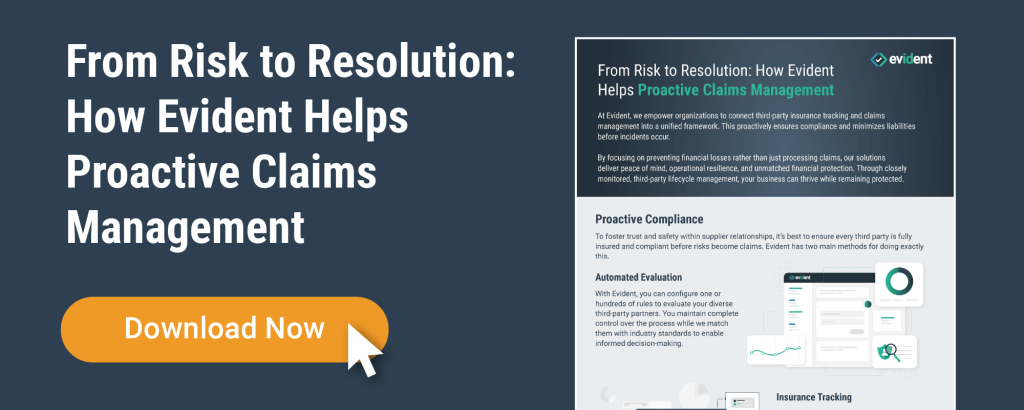
Robust technology like Evident can help. Evident enhances third-party risk management by automating document collection, verification, and continuous monitoring for a more proactive risk management process.
Request a demo today to see how our platform transforms your TPRM strategy.
Related Resources
- What Insurance Should You Require from Vendors? A Practical Checklist
- Waiver of Subrogation: What It Means and Why It Matters
- Workers’ Compensation Monopolistic States: What They Are and How to Verify COIs
- Understanding Subcontractor Insurance – What You Need to Know
- What Risk Managers Should Know About Working with Police