

January Compliance Coffee Talk: Risk Manager Career Paths
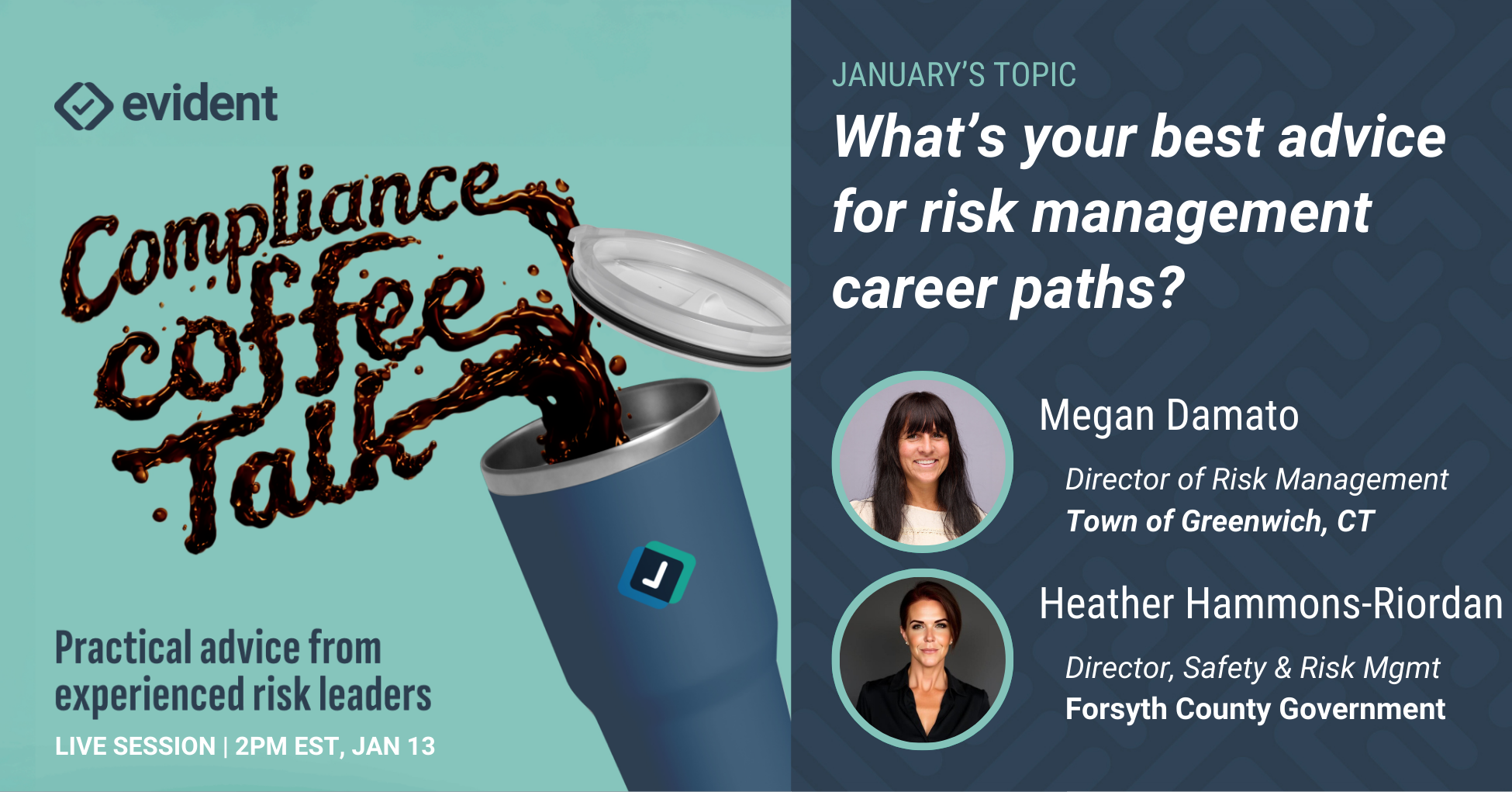
Compliance Coffee Talk covers a new topic each month – RSVP for the series.
January: “What’s your top advice for people on the Risk Management career path?”
For the first session of the year, we tackled a topic that people requested back in the fall, and brought in a couple experienced, beloved risk leaders to talk about their path and the advice they give others.
Watch the full replay, or keep scrolling for a summary of some of the key insights and practical tips from the session.
Meet the Experts
- Megan Damato: Director of Risk Management @ Greenwich CT.
- Heather Hammons-Riordan: Director of Safety & Risk Mgmt @ Forsyth County Government
We’ll discuss:
- Their career paths: Megan coming from Law, and Heather rising from claims coordinator
- How the risk management career path is changing now
- Certifications – are they worth it? Which ones?
- Skills that Risk Managers need to develop most
- When risk managers are ready for more responsibility / promotions
- The most frequent advice they give to others
Key Takeaways
You’ve gotta listen for the real insights, but if you just want a cheat sheet, here are some of our takeaways from the session.
1. Risk Management requires both constantly pivoting, while also being proactive.
This is what surprised them as they really got hands-on in risk management: The reality is that you’re constantly triaging and pivoting between so many different things, but you’ve also got to find a way to be proactive about preventing risk and building systems, not just constantly juggling and reacting.
Being able to embrace the reality of constant triage, while finding ways to be proactive is core to success in the job.
“It literally is constant triage, just like in an ER… you’ve got to be able to learn how to react and pivot.” — Heather
“You’ve got to learn how to prevent something or mitigate something before there’s a problem than wait for there to be a problem.” — Megan
2. Growing your impact and earning new opportunities requires both gaining experience and building trust.
Some tips that Megan and Heather frequently give:
- Understand how your partners in other departments work. Go on ride alongs. Make sure that you can speak their language. That’s necessary both for building their trust, but also for giving your the context you need to do your job best.
- Never hesitate to ask questions, even if they sound dumb. The only dumb question is the one that you don’t ask.
- Take advantage of training whenever you can, and know that there’s more out there and available than you think.
“Get out into the departments. Do ride-alongs. Learn their operations and speak their language.” —Heather
3. If you’re a Department of One, like Megan, build “mini risk managers” in other departments.
Just as you need to learn from your colleagues in other departments to do your job better, you also need to figure how how to help them think and act like a risk manager, not just so they can do their job better, but also so 100% of the burden doesn’t fall on you. You can’t afford to be the only person who feels that they’re responsible for risks – everyone is a risk manager in one way or another.
“I’ve built a network of ‘mini risk managers’… people who have training to identify risks and escalate issues to me when needed.” —Megan
4. Are certifications worth it? Yes. Sometimes. It depends.
Both Megan and Heather emphasized that the most important credibility you build is through real-world, hands-on experience, but trainings and certifications can be a great benefit to.
There are a lot of different trainings and certifications out there, so give thought to what is most relevant and interesting to you.
- Workers comp designations, adjuster licenses can be relevant
- ARM is valuable, but can be a lot of work, so be thoughtful about timing
- PRIMA chapters are a great resource, and you probably have one that’s local to you.
“Experience and mentoring come first… That said, certifications can absolutely help.” —Heather
5. How can you get more proactive and advocate for being strategic and not just reactive?
It’s hard, really hard, but we got a few tips:
- Don’t make your case with the level of stress you’re feeling, make it with metrics. Track where your time is going, where risks are popping up, where the biggest risks are.
- Think about systems and tools that can help you do your job. Know that changes to processes and systems have to be part of the process – you can’t always just grow your department and do more of the same, you’ve got to figure out what to do differently or better.
- Build time into your week for proactive work, preventive work, strategic work, and training. You can’t just make time for it reactively, you’ve got to put it in your calendar.
6. What lesson do you wish you’d learned earlier in your careers?
Actively seek out mentorship and other resources for growth. There are more resources available than you think, and people are more willing and enthusiastic to help you than you think.
Actively learn from your colleagues in other departments – however embedded you are with your partners, you could probably do more. And share your challenges with them too, because they can help, have good ideas. You really shouldn’t ever have to feel like you’re on an island.