
Compliance Coffee Talk · November 2026
How to work with your underwriter
Safety National underwriter Susan Kostro joins risk managers Megan Damato and Sara Lowenthal to talk through what underwriters look for, how to get your property values right, and what to do when a big claim lands.
Guest experts
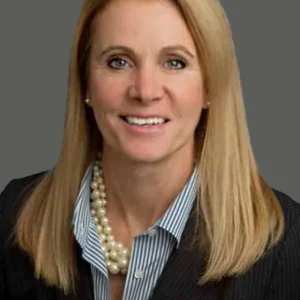
Susan Kostro
Director, Public Entity Underwriting, Safety National

Megan Damato
Director of Risk Management, Town of Greenwich, Connecticut

Sara Lowenthal
Former Director of Safety and Risk Management, City of Hartford
The session
An underwriter and two risk managers who work with carriers
Susan Kostro has been an underwriter for 30 years, mostly focused on public entities for the last 15. She is Director of Public Entity Underwriting at Safety National in Boston, and has worked at AIG and Liberty Mutual. Her focus is casualty, and she knows workers' comp and some property too.
She was joined by Megan Damato, Director of Risk Management for the Town of Greenwich, Connecticut, and Sara Lowenthal, who worked for carriers for 20 years before leading safety and risk management for the City of Hartford and now consults. On November 10, 2026, in the second session of our three-part Coffee Talk series on brokers, carriers and risk registers, they talked through what underwriters look for and how to work with them.
Watch the conversation, or read the takeaways below.
Key takeaways
15 takeaways from the session
Susan, Megan and Sara's advice in five themes, from how an underwriter reads your submission to what to do when a big claim lands.
01–03
How an underwriter reads your submission
Susan starts with the broker, then works through exposures, losses and what you're doing about them.
- 01
Exposures first, then losses against your attachment
Susan begins by asking the broker who the current carrier is, what the program looks like and why it's out to market. Then she looks at exposures, like auto, law enforcement and schools, and compares your losses to your attachment point. If you have a lot of losses over $250,000, she says, it may make sense to move up to $500,000 instead of paying premium for losses you'd cover anyway.
The takeaway: Check that your retention fits your loss history before renewal.
- 02
Context changes how a claim is read
Susan is working on an account with two large claims that are new since last year. One is a police pursuit claim, and Safety National doesn't write that entity's law enforcement coverage, so it's unclear whether it's an auto claim. After one call with the broker and risk manager, Susan thought there was a good chance Safety National would pay nothing on it. Loss runs don't show that kind of detail.
The takeaway: When a large claim shows up on your loss runs, explain it to your underwriter directly.
- 03
Show that you're working on it
The same insured sent details on how much they use Safety National's risk management tools and how many drivers took online or in-person driver training. Susan says that makes a big difference. Losses are trending up, and if you're doing nothing, your losses and premium will likely keep rising.
The takeaway: Send proof of your training and loss control work with your submission.
“We want to cover some of your losses, but we don't want to cover all of your losses.”
Susan KostroDirector, Public Entity Underwriting, Safety National04–06
Build the relationship before renewal
Accurate applications and regular contact give your underwriter the full picture.
- 04
Get the application right
Coming from the carrier side, Sara knew accuracy mattered most. When she started in Hartford, she had no idea how many bridges or miles of highway the city had, but someone did. Once you have it, you can reuse it next year. "We're not buying bridges."
The takeaway: Gather accurate exposure data so the policy fits and you're covered after a loss.
- 05
Talk to underwriters outside the application
Megan says applications leave out a lot of the backstory. Greenwich's cyber application is detailed, but meeting the underwriter lets her cover what it misses, and she brings in IT for the technical questions. Sara checks in off-season to share wins, like a new safety program or equipment purchase. Susan adds that it never hurts to meet in person.
The takeaway: Meet with your underwriters at least twice a year.
- 06
New with a renewal close? Start with your broker
If you take over in October with a January 1 renewal, Susan suggests having your broker walk you through the current program, the binder and policy, recent changes and any loss issues. Ask what information you need to gather, and whether you can meet the underwriter for a read on your losses, the market and any form changes. Sara schedules broker meetings from the 90-day mark forward.
The takeaway: In your first weeks, get the binder, the policy and a to-do list from your broker.
07–09
Get your property values right
Start with your biggest values, then keep the schedule current with the people who know the buildings.
- 07
Start with your largest TIV
Sara works through the property schedule by total insured value, biggest first, which is where your property carrier will focus too. Next she looks at building age, which can point to safety work, like a new roof, that she can help public works get funded. Local priorities matter. If schools are under scrutiny, start there, though they're likely your largest values anyway.
The takeaway: Review your property schedule by value first, then by age.
- 08
Confirm the schedule with facilities
Megan went to the town and school facilities departments to confirm roof years, construction types and additions. Ten years later she still finds updates. She now stays in touch with the building committee, so she hears about new buildings and renovations firsthand.
The takeaway: Get building committee updates so your statement of values stays current.
- 09
Use your tax assessor's records
Sara cross-checks with the tax assessor's office. Assessment cards list square footage, year built, sprinkler coverage and roof type, the details underwriters ask about. When something doesn't match, she raises it, and sometimes the assessor sends someone back out. An online GIS system makes this easier.
The takeaway: Compare your schedule against assessor cards to catch errors.
10–12
Use what your carrier offers
Many risk managers don't know about the training and funding carriers offer.
- 10
Online training can cover more than safety
Safety National has its own risk management team, and through them and her TPAs Sara found a large online training library, including soft skills courses. It's a full learning management system, so you can assign and track training, then print a report to send with your application. Megan plans to start with a defensive driving program.
The takeaway: Ask your carrier and TPA what training is included, and use the reports as proof.
- 11
Ask for custom training and referrals
When Connecticut's sexual harassment training requirements changed, Sara's carrier built an online course to meet them. They also recommended trainers for in-person defensive driving, since her crews wouldn't take it online.
The takeaway: If prepackaged courses don't fit, ask your carrier to build one or recommend a trainer.
- 12
Build risk management dollars into your policy
Susan says Safety National tries to include risk management dollars, which help most when an entity has no budget or risk department. Sara started with no budget, and this was the most useful thing her carrier did. She made sure to spend the full amount every year. It's use it or lose it, like an FSA, which keeps you motivated, and when she had money left for a program planned the next year, she asked to roll it forward.
The takeaway: Ask for risk management dollars at renewal, and spend them.
“It was really important to me to make sure I used up that whole allotment of dollars every year.”
Sara LowenthalFormer Director of Safety and Risk Management, City of Hartford13–15
When a big claim hits
Report early, and know what actually moves your pricing.
- 13
Report early and on the conservative side
Check your policy's reporting requirements. Thresholds are often a share of the SIR, such as 50%, or serious events like a death, a head injury or paralysis. Susan says carriers like Safety National won't deny a claim for being a day late, but early reporting helps with discovery and mitigation. Megan adds that in Greenwich, the TPA reports claims to the carrier's claims team, so find out what process you have in place.
The takeaway: Know your reporting thresholds and who files the notice.
- 14
Frequency costs more than one big claim
Underwriters are notified of large claims and review them, and Susan sits in on four or five claims roundtables a week. One large claim on an otherwise good loss history won't always change your pricing. The same loss happening again and again is penalized more, because it points to a problem that needs fixing.
The takeaway: Look for patterns in repeat losses and fix the cause.
- 15
Markets move, and good accounts get stable pricing
Some line is always in flux. About five years ago, Susan recalls property rates rising around 50%. Now property is more competitive, and casualty has new competitors. She says Safety National tries to stay stable and reasonable in both directions, especially with accounts it has worked with for a long time.
The takeaway: Focus on what you control: your losses, your data and your loss control work.
Next in the series
Join us for the risk registers session on November 17
In session three, Megan shows how she uses risk registers to get risk on everyone's radar. Sign up and we'll send you the invite.