


Why Claims Management Starts with COI Tracking

Working with partners inevitably involves risk. There’s always the chance of something unexpected — a fire, an on-site accident, or some other unfortunate incident that results in a financial loss. That’s why businesses carry different types of insurance for financial protection.
The business insurance market reached over $258 billion in 2023, a 1.7% increase. Organizations clearly see the benefits of proper coverage. However, there’s always a risk that a partner will fail to renew their policy or won’t have the right insurance for a loss. That’s where a solid claims management process comes in.
Onboarding typically involves verifying a partner’s insurance coverage before they start a project. However, organizations that stop there without a monitoring process may face financial repercussions. Certificate of insurance (COI) tracking alleviates those risks. With COI tracking, you can stay on top of your partner’s insurance coverage changes.
The Role of COI Tracking in Risk Prevention
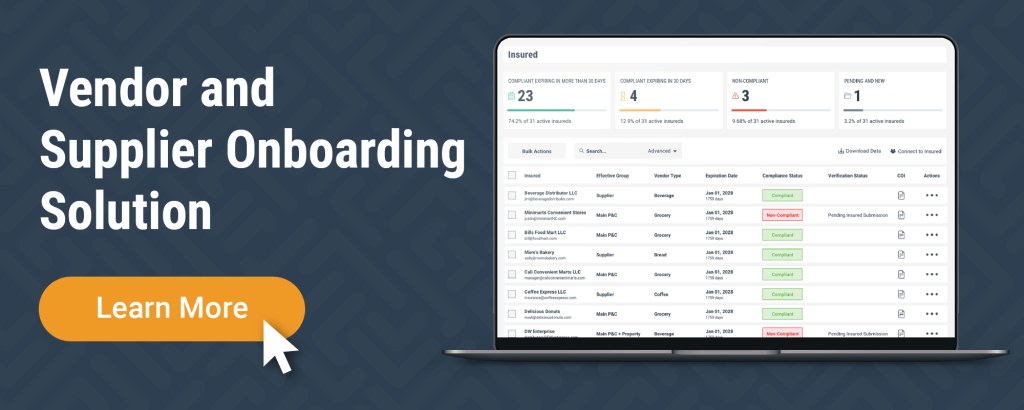
Do you know what your current partner’s insurance coverage status is? If so, you probably have a COI tracking process in place to keep you abreast of your partner’s insurance policies and whether they’re current. A COI tracking process can be manual or automated.
- Manual COI tracking requires meticulous records upkeep. You might use spreadsheets that list a partner’s name, basic coverage information, and insurance expiration date. Your documentation might also include paper or digital copies of their actual certificate of insurance. Staff relies on all those records to follow up with a partner when their insurance policy nears expiration.
- Automated COI tracking eliminates redundant manual processes and replaces them with a streamlined system. It still performs the same task — verifying your partner’s current insurance coverage — but it’s much more efficient.
COI tracking is critical to any company that relies on outside partners. It’s a proactive way to double-check their coverage well before there’s a need for an insurance claim. That way, if an incident happens, you’ve done due diligence to protect yourself by verifying their active policy.
Businesses that don’t track COIs may risk financial losses stemming from a partner incident. If their policy lapses, the organization may be held financially responsible for the incident. Proactively reviewing COIs lessens your exposure.
Real-World Consequences of Missing COIs
Why is tracking COIs so crucial to your business? Let’s look at a few hypothetical examples to see how it may affect your organization.
The Uninsured Contractor at a Municipal Building
Governmental entities sometimes turn to outside contractors for routine facility maintenance, such as electrical work or landscaping. Assume your local town hall hires a third party to mow the lawn weekly. During the initial onboarding, an employee checks the landscaper’s certificate of insurance. It’s valid, with an expiration date several months in the future. All goes well for six months until the landscaper’s ride-on lawnmower catches fire. The blaze spreads into the city building, causing $350,000 in damage.
Unfortunately, the landscaper missed their insurance renewal date, and the policy lapsed. Since the landscaper cannot pay for the losses out of pocket, the city government’s insurance company is responsible.
The insurer pays for the damage, but next year’s premiums shoot up by 20% — a $15,000 difference. The finance department didn’t plan for such a significant increase and needs to find a way to reduce costs elsewhere to compensate. Even worse, the fire makes headlines in local news. Someone leaks the story of the certificate of insurance mishap, and residents express anger at their tax dollars going toward a preventable mistake.
Could all this have been prevented? Yes. The city’s failure to implement a robust COI tracking process inadvertently caused its financial losses.
The Public Transportation Incident
Most cities offer public transportation, such as buses, light rail, or subway. Suppose your municipality provides an inexpensive bus service for residents. It contracts maintenance and repairs to a local repair facility that specializes in buses. The new partner provides a valid certificate of insurance, which city workers file after signing the contract.
The repair facility continues to handle bus maintenance for eight months with no issues. One day, the city delivers a bus for repairs, and a worker starts the inspection. The technician noted that the bus tires were fraying and decided to replace them with a new set. They put the bus on a lift, but it isn’t adequately secured. As the worker slides underneath the bus, it falls, causing a severe injury. The technician cannot work for months and requires expensive medical treatment. So they filed a claim with the repair company, but it failed to renew its policy, meaning the financial burden falls to the transportation authority.
The worker files a costly lawsuit against the transportation authority for failing to review the facility’s COI. The lawsuit makes the news, causing irreparable reputational damage. Next year’s insurance premiums go up, and there are issues fitting them into the budget.
The incident might not have caused financial disruption or reputational damage to the transportation authority had it checked on the repair company’s COI and withheld work until they were properly insured.
If the accident happened after the repair company re-validated its COI, the worker could file a claim against its insurer. It wouldn’t fall to the transportation authority.
A Natural Disaster and Unverified Insurance
Assume you’re an administrator for a Florida school district. You hire a contractor to install new windows in several local elementary schools. The onboarding process goes well — you receive a copy of their valid insurance certificate and feel they’re the right partner for the job. The contractor gets to work after selecting windows specially designed for hurricane-prone areas.
A few months later, a major storm strikes. The contractor failed to properly secure one school’s windows, and the winds knocked them out in minutes. Water quickly filled the building’s interior, causing an estimated $1.3 million in damages.
A property claims assessor attributes the flooding to the newly installed windows. It notes that other schools with similar window installations didn’t sustain any damage. The assessor finds evidence that the contractor’s work was below industry standards.
You decide to file a claim against the partner’s insurance company. However, their coverage ended before the work started, and the insurer won’t cover the damage. The school district is stuck with the bill, and it can’t reopen for classes until the building undergoes repairs. This causes immense frustration in the community as parents struggle to find an alternative for their children.
A COI tracking process might have uncovered the expired insurance before you needed to file a claim.
COI Tracking as the First Line of Defense
In all of our hypothetical examples, a monitoring system could have prevented the financial losses. Had the victims known their partners didn’t have insurance, they might have stopped the work until coverage was in place or chosen a different contractor altogether.
COI tracking monitors all aspects of a partner’s insurance coverage. You can use it to review the types of insurance they carry, coverage amounts, and policy expiration dates. Some of the features to look for in a COI tracking system include:
Automation and Monitoring
With a COI tracking system, there’s no longer any need for manual verification and overflowing spreadsheets. Your partner’s insurance data stays neatly stored in the database, and you’ll know when it’s time to reach out to them to reconfirm coverage.
Automation removes the risk of a staff oversight that endangers the organization.
Visibility Into Risk
Instead of relying on employees to proactively check insurance coverage, your COI software does it automatically. It notifies you when a partner’s coverage is nearing expiration so you can request a new certificate of insurance. Some COI monitoring systems inform the contractor, too, so they know to renew their coverage.
You’ll be able to know via your monitoring system if your third-party partner’s insurance expires. You can use that information to stop in-progress jobs until the contractor gets an active policy. The knowledge can also help you avoid accidentally hiring an uninsured partner.
Seamless Integration With Claims Management
A COI tracking system pairs naturally with claims management. Whenever a claim arises, you can turn to your software to identify a partner’s insurer. You’ll know the coverage is in place because you have current insurance certificates for every contractor you work with. That substantially reduces your organization’s risk of financial losses.
Practical Steps To Implement COI Tracking
Introducing a new COI monitoring system to your processes is simple. Use these tips to get started.
Step 1: Centralize COI Collection and Storage
Select a location to store copies of your partner’s COIs. You can keep records digitally or physically, so they are always available.
Step 2: Automate Compliance Verification in Real Time
Your new COI software should include automation features to track supplier insurance coverage. Use the tools during the partner onboarding process to help you verify current insurance and identify potential gaps.
Step 3: Leverage Ongoing Monitoring to Identify and Resolve Non-Compliance Proactively
Update software settings to notify you when a partner’s insurance coverage is nearing its expiration date. You can contact your contractor and secure an updated COI, then transfer it to your system.
Protect Your Business From Claims Losses
You never know when an incident will disrupt your organization and lead to a claim. The best way to protect yourself is through a proactive COI tracking system. Your software makes it easy to stay on top of your partner’s insurance coverage so you don’t end up with an unexpected claim denial.

A comprehensive COI tracking system like EvidentID notifies you when a partner’s policy is nearing expiration. It can do other things, too — like help you identify partners you work with that have the proper coverage for a specific job.
To learn how EvidentID can safeguard your business against claims-related financial losses, request a demo with our team.
Related Resources
- What Insurance Should You Require from Vendors? A Practical Checklist
- Waiver of Subrogation: What It Means and Why It Matters
- Workers’ Compensation Monopolistic States: What They Are and How to Verify COIs
- Understanding Subcontractor Insurance – What You Need to Know
- What Risk Managers Should Know About Working with Police