


Top 5 Risks of Missing COIs in Claims Management

Part of your process when onboarding a partner’s documentation is to collect their certificate of insurance and verify their policy coverage. Certificates of insurance (COIs) are documents that detail your partner’s coverage. These are essential to keeping claims manageable — but a single missing one can turn a normal claim into a financial nightmare. Create a step in your processing to verify COIs and avoid the negative consequences of inadequate risk management.
The Overlooked Importance of COIs
COIs serve as proof that a partner has the required insurance to field potential risks. When you establish a process to verify COIs, you don’t just verify that coverage exists, you make sure that it is legitimate coverage.
In industries like construction and home services, it’s not unexpected to come across a fraudulent COI. Signs that a COI is fraudulent or altered include:
- Inconsistent handwriting or errors
- Fake company names
- Certificates printed on non-industry standard forms
If you don’t catch this early in your partnership, your company may be unknowingly exposed to risks. You may become the responsible party for insurance claims and face expensive financial responsibilities. So setting up a process for identifying missing, out-of-date, and fake or altered documents is essential to protecting your organization’s economic interests.
Read on to learn about the top five risks of failing to verify and track COIs, including the dangers of fraudulent documentation, and the financial and operational consequences that can result.
Risk 1: Financial Losses Due to Uninsured Third Parties
Your organization could end up being responsible for the costs of insurance claims if you partner with uninsured third parties. If a partner without liability coverage damages property rented from you, who covers the cost? Most likely you, either by outright paying to repair the item, opportunity costs of having damaged equipment out of the game, or increased insurance rates after using your policy to cover repairs. As of 2023, the Insurance Information Institute tracked annual defense and cost containment expenses related to shouldering the burden of a liability claim at over $26 million.
It’s easy to see why, given the frequency and cost of events that prompt liability claims. Some of the most common events that result in businesses filing a liability claim are burglary and theft, water and freezing damage, and wind and hail damage. The average most costly incidents related to claims are reputation harm ($50,000), vehicle accidents ($45,000), and fires ($35,000). Simple claims for burglary and theft can range from $8,000 to $50,000.
When you establish COI tracking processes, you verify that all policies have adequate insurance upfront. This should shield your organization from any unexpected expenses or responsibilities in the face of filing a claim.

Risk 2: Legal and Contractual Non-Compliance
Remaining compliant with your local requirements and contract specifications is an important step in protecting your company from lawsuits or fines. Often, contracts require partners to maintain specific insurance coverage. Checking COIs at the beginning of a partnership and routinely verifying that they are still within date can prevent accidental contract violations.
If you happen to miss a COI from a partner who should provide workers’ compensation insurance, your organization is now potentially exposed to lawsuits from injured workers. With workers’ compensation claims averaging over $44,000 per claim (but easily going up to over $120,000), leaving a gap in insurance coverage could cost your company large sums.
In fact, the incidence of US liability claims has increased in frequency that exceeds economic inflation. This has driven up the costs of litigating these claims by 57% over the past decade. Keeping clear of this trend should be a goal for your claims department.
So, opt for proper third-party insurance tracking to maintain compliance with contractual and legal requirements. Establish processes that match contract and local legal requirements to the coverage detailed in the COI.
Risk 3: Denied Insurance Claims
When damage to property or equipment forces you to file an insurance claim, it can be a shock to face a denial. But that’s what might happen if you fail to verify third-party insurance coverage. Your organization could become ineligible for reimbursement or claim approval.
You could also be denied if you can’t meet timely claim filing requirements. Insurers may enforce filing periods as short as 30 days, while others may allow up to two years. The Insurance Information Institute notes you generally must provide proof of loss within 60 days of making your claim, so acting quickly is important. However, if your COI verification information is missing or out of date, it can become difficult to satisfy these requirements.
Imagine you’re a transportation agency that experiences an accident involving one of your partners. Due to oversight, you put off filing the claim and end up missing the insurer’s specified time frame. This disorganization leads to the claim getting denied and your agency becoming responsible for all associated costs.
Mistakes happen. Anticipating them is essential to avoid contributing to the over $3 trillion in losses American businesses experience related to poor data tracking. Make it a policy to verify that COIs are valid and up to date. Create a process to track data related to the insurer’s claim filing deadlines so you can meet coverage eligibility. That way you can prevent extra costs and frustrations related to denied claims.
Risk 4: Cost Control
Legal fees and time lost to legal disputes are other costs that you may not expect to result from missing or unverified COIs. If you are unable to file claims directly with insurance carriers and must pursue legal action to recoup costs, you can easily drain your cash and strain your available resources during the dispute.
Imagine facing a liability claim after a contractor you’re working with causes property damage. If you’ve got the right information related to its COI, such as tracking, identifying the carrier, and verifying policy details, you can file a claim quickly. But if you don’t have this info, prepare for a drawn-out conflict.
Other types of employment suits average $75,000 in legal fees for a business to establish a defense. This cost can stall other business production as your cash flow is impacted.
Tracking COIs from the beginning and having all the details such as the carrier and policy specifications documented makes it easier to file claims when the need arises. Manage risk and avoid the expense and time of legal disputes, ultimately maintaining better cost control, with simple documentation.
Risk 5: Limited Coverage Insights Without Full Insurance Policies
Not having enough coverage when you file a claim can have serious financial impacts. While a COI provides a summary of coverage, it won’t have all the policy details. As you perfect your COI documentation process, decide what kinds of information you need to request from partners alongside the COI. Specific policies contain critical information, such as exclusions, coverage limits, and endorsements that can clarify the extent of coverage and protection.
Your organization could be put in a tough spot if you only document COIs. A contractor could submit a COI that appears to meet project requirements. But if you prepare to make a liability claim, only to realize its policy excludes coverage for the type of incident that occurred, then you’re on the hook for the related costs.
Policy exclusions aren’t uncommon. The policy exclusions you’re likely to come across in terms of liability include demolitions, work with explosions, and mold. You may be shocked to realize many construction activities like residential construction, earth movement, and even subcontracting may fall under these exclusions, as might heights above three stories.
If the full policy is collected alongside the COI, incidents like the one above can be avoided. Knowing there is a gap in coverage can let you adjust your policy and mitigate the risk of exposure. If you can’t access the full policy, you could face an unpleasant surprise upon filing a claim. Add steps into your process to find and document policies and then prepare for any possible exclusions or non-covered incidents.
Streamlining COI verification processes to include collecting policy documents upfront is a smart move for companies working with third-party suppliers. Document the coverage, reduce the risk of surprises during claims, and enable faster, more efficient resolutions. A proactive approach empowers claims teams and strengthens risk management.
Don’t Let Missing COIs Derail Your Organization
You can avoid missing COIs if you have a tracking process to gather all necessary COI information early in your relationship with third-party suppliers and partners. You can forestall potential financial losses, legal exposure, denied claims, reputational damage, and operational delays when you make it a point to stay on top of COI verification.

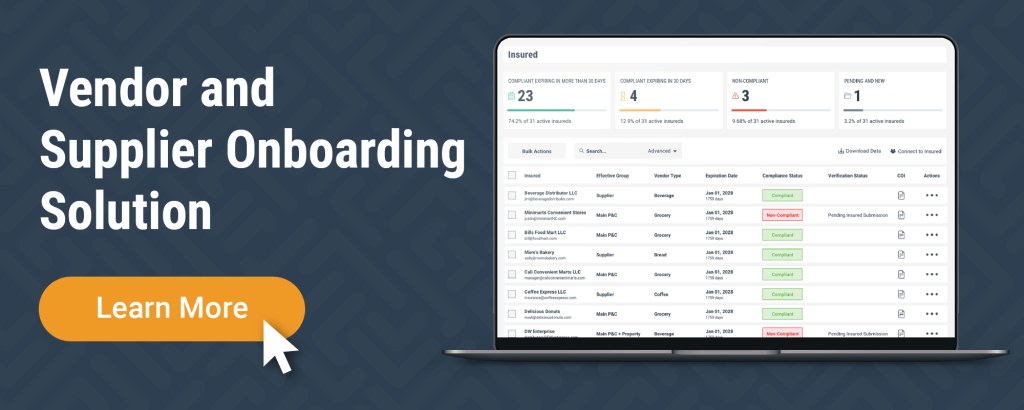
Adopt a proactive COI tracking solution to manage your risk and protect your organization when you partner with EvidentID. We can do the heavy lifting of verification, tracking, and documentation so that you have all the information you need upfront. Use our automated system to integrate the evaluation of suppliers, vendors, and customers seamlessly into a unified space.
Request a demo to see how we can transform your third-party insurance tracking.
Related Resources
- What Insurance Should You Require from Vendors? A Practical Checklist
- Waiver of Subrogation: What It Means and Why It Matters
- Workers’ Compensation Monopolistic States: What They Are and How to Verify COIs
- Understanding Subcontractor Insurance – What You Need to Know
- What Risk Managers Should Know About Working with Police