


Managing Risk in Public Sector Pools

Choosing the best way to protect your public entity from legal and financial risks can be challenging. Unlike private companies, commercial insurers struggle to provide quality coverage at affordable prices for public entities. Catastrophic financial losses, class-action lawsuits, intense political and media scrutiny, and the complexity of coordinating multiple agencies and jurisdictions make public entities less attractive to private insurers.
So government entities band together to share the risks. These risk pools offer insurance policies that are similar to what you’d get from a private insurer, but the costs are divided among pool members. This risk-sharing approach makes quality coverage more affordable for public entities and less susceptible to market volatility.
Even so, public entities should consider proactive liability management in high-risk situations to prevent escalations leading to severe financial, legal, and reputational consequences.
Recognizing Potential High-Risk Liability Situations
The first step in risk management is to map out potential high-risk liability situations. It starts by recognizing that risks take many forms, from the abstract to the tangible. This means looking at every aspect of your public entity, including operations, systems, personnel, processes, relationships, and external influences.
While the public sector often faces a variety of challenges, the most common high-risk scenarios include:
- Construction projects: High injury rates and noncompliance with regulatory standards often lead to costly claims and penalties.
- Law-enforcement activities: Actions such as arrests or the use of force can quickly escalate into legal issues if proper protocols aren’t followed.
- Environmental hazards: Issues like pollution, toxic waste, and contamination present long-term risks, with claims potentially arising even years after the initial incident.
- Natural disasters: Inadequate preparation for or responses to public safety concerns can increase risks and liabilities.
But since every public entity differs, how do you know when a risk has escalated and requires immediate attention?
Identifying Warning Signs of Escalating Risks
Most organizations want to catch risks before they escalate into liability. After all, identifying early warning signs allows you to mitigate or transfer risk and minimize damages. To help you determine whether your entity is facing escalating risks, here are some telltale signs to consider.
Frequent Incidents Involving the Same Contractor or Project
Frequent incidents or violations tied to the same contractor or project can signal deeper operational or compliance issues. For instance, repeated problems may point to inadequate oversight, a skill gap, or misaligned safety protocols, which might increase your risk exposure and liability. If you identify these patterns early, you can address the root cause, ensure accountability, and reduce the potential hazards on current and future projects.
Increasing Complaints From the Public or Internal Stakeholders
An uptick in stakeholder concerns often indicates dissatisfaction, a gap in service quality, unmet expectations, or potential hazards that may lead to liability claims if not addressed. You want to promptly resolve these grievances to improve your public relations and prevent escalations into more serious risks.
A History of Underinsured Contractors or Those With Poor Safety Records
A history with underinsured contractors or those with poor safety records can signal vulnerabilities within your operations. Such contractors may not have the financial resources to handle unexpected incidents, leading to potential liabilities for your business.
External Factors
Other times, external factors, such as changes in the regulatory or legal landscape, can suddenly increase your organization’s liability exposure. These changes can introduce new compliance requirements, forcing your public entity to adjust its strategies.
High-Risk Activities Requiring Heightened Attention
Certain activities pose high risks to your public entity and require enhanced oversight and management:
- Large-scale public events with multiple contractors and temporary suppliers can pose a high risk due to coordination complexities and a heightened potential for accidents and non-compliance.
- Critical infrastructure projects, such as road, bridge, or utility construction, are prone to accidents that can result in serious injuries and property damage.
- Transportation and fleet operations carry significant liability risks, as accidents involving government vehicles or services can lead to frequent third-party claims.
Identifying high-risk activities and giving them the necessary attention will help you maintain your operational integrity and public trust.
Strategies for Managing and Mitigating High-Risk Liability Claims
Once you’ve identified your risks, it’s time to strategize to protect your organization against losses caused by events outside your control. While it’s impossible to eliminate all of your risks, some strategies can help you mitigate their impact.
Implementing Effective Risk Transfer Mechanisms
Risk transfer can relieve your organization of the financial burden associated with potential risks. It reallocates the risks to other entities that are willing to accept them in exchange for compensation. The compensation can be in terms of:
- Insurance premiums
- Contractual agreements
- Fees
The first step is to find and join a well-managed public risk pool. With insurance coverage, the financial burden of an accident doesn’t fall solely on your public entity. Instead, you spread it among all pool members to protect your financial well-being in case of an accident. The best practice is to ensure that you have adequate policy limits, especially for high-risk activities like construction and public safety operations, to protect yourself against possible claims.
Beyond insurance coverage, use contractual safeguards such as indemnity clauses to transfer risks to the contractors you work with. This will shield your organization from potential liability arising from unforeseen events caused by contractors.
Crisis Management in High-Risk Liability Situations
Transferring your risk alone isn’t enough in times of crisis. You need a well-laid-out plan to manage a crisis and ensure business continuity.
Start by creating a rapid response team that’s dedicated to handling high-profile claims and mitigating further damage. Train team members to quickly address critical issues and minimize the financial and reputational fallout.
You should also develop an effective media containment strategy to manage public perception. This is critical because a high-risk crisis in the public sector is likely to attract media, political, and public attention. You want to be in a position to control the narrative, issue clear statements, and maintain transparency to alleviate the public’s concerns and preserve your organization’s reputation.
Regardless of the crisis category, consider an immediate legal consultation to assess your liability exposure and negotiate a settlement. With quick legal intervention, you can navigate complex claims and avoid prolonged legal battles to protect your public entity from severe financial consequences.
Leveraging Technology to Manage High-Risk Contractors
Technology plays a critical role in modern risk management. You can use it to:
- Automate risk-tracking, monitor contractor compliance and performance, and analyze potential risks
- Collect real-time data to identify early warning signs, such as performance issues or regulatory noncompliance in high-risk projects, and intervene before incidents occur
- Automate alerts to notify teams when critical issues arise, such as contractor insurance policy lapses or compliance violations, to reduce liability exposure
In other words, technology allows you to chart the nuanced risk landscape for better decision-making.
Long-Term Mitigation: Building a Risk-Aware Culture
While it sounds cliche, every stakeholder in your public entity is a risk manager. After all, people run your organization, and their knowledge of risk management is a key component of your success.
To that end, you want to create a risk-aware culture, which begins with training your staff and contractors to recognize and address high-risk situations. Establish clear protocols for reporting incidents and managing potential claims before they become major liabilities. Adopt a continuous education program on regulatory changes and liability trends to help adjust your strategies and remain compliant.
Case Study: Managing a High-Risk Claim in a Public Sector Pool
A prominent example of a real-life high-risk liability situation is municipalities handling water contamination from polyfluoroalkyl substances (PFAS), often known as forever chemicals. PFAS have been found in water supplies across the U.S., and their risks are linked to serious health effects.
Municipalities have responded to this emerging risk by identifying potential contamination sources and implementing risk mitigation strategies. For instance, many are upgrading their water treatment facilities and pushing for alternative firefighting foams that don’t have PFAS.
Public sector pools have played a role in assessing liability exposure, especially for municipalities near industrial sites, airports, and military bases where PFAS are common.
Long-Term Risk Mitigation Tactics for High-Risk Liability Claims
Traditional mitigation practices primarily focus on risk visibility and detection. However, this approach isn’t sufficient to navigate long-term uncertainties.
To mitigate long-term risks, you’ll need the right tactics.
Comprehensive Risk Reviews for High-Risk Projects
Long-term mitigation goes beyond remediation to include thorough risk reviews for high-risk projects. It involves identifying possible risks throughout the project’s lifecycle. This might include risks related to safety, regulatory compliance, environmental impact, and financial stability.
The key steps of a comprehensive review process include:
- Pre-project risk assessment: Analyze the project’s scope, stakeholders’ concerns, and site conditions.
- Stakeholder engagement: Involve all relevant parties in the risk review to get insights on the risks to expect.
- Scenario analysis: Consider scenarios that could result in an incident and assess their likelihood to happen and potential impact on outcomes.
After reviewing your processes, consider auditing the contractors’ insurance coverage and risk transfer mechanism to ensure their coverage aligns with your project’s needs and regulatory requirements. The audit should be continuous because circumstances can change as projects progress, leading to new risks or altering the existing ones.
Advanced Supplier Screening and Due Diligence
Once you’ve reviewed your risks, consider implementing advanced contractor screening and conducting due diligence. This involves pre-qualifying contractors for high-risk activities like construction, law enforcement, and environmental work.
Verify the contractor’s insurance, compliance records, and safety performance to identify hidden risks.
Proactive Communication and Transparency in High-Risk Situations
During crises, your organization should use proactive and transparent communication to build trust with interested parties. Establish a clear crisis communication plan for managing public and media relations in high-risk situations. This will help your organization report up-to-the-minute information to key stakeholders, minimizing the spread of misinformation and reputational damage in the event of a claim.
Evident’s Role in Risk Management for Public Sector Pools
Risk management is too often considered only a compliance issue rather than a way to avoid costly liability claims in the public sector. However, such an approach doesn’t reduce the likelihood or impact of an incident. Your organization can tailor its proactive management strategy with robust technology to mitigate high-risk claims.
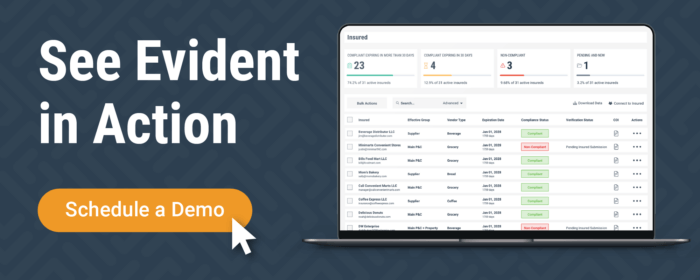
At Evident, we empower public entities to continuously monitor their contractors, projects, and industry trends to stay ahead of potential liabilities. With our platform, you can get insights into hidden threats within third-party relationships, which can help you shift from reactive to proactive risk management.
Request a demo today to learn how Evident can transform your public entity risk management practices.
Related Resources
- What Insurance Should You Require from Vendors? A Practical Checklist
- Waiver of Subrogation: What It Means and Why It Matters
- Workers’ Compensation Monopolistic States: What They Are and How to Verify COIs
- Understanding Subcontractor Insurance – What You Need to Know
- What Risk Managers Should Know About Working with Police